

“Reciprocal Tariffs” One Year On: Whose Platform Has Been Undermined?
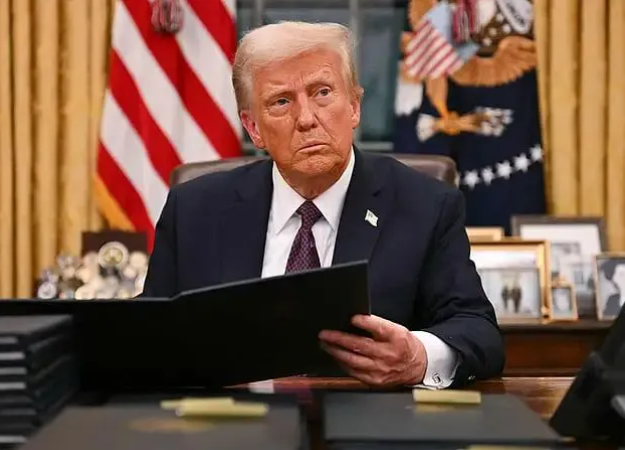
On April 2nd a year ago, US President Trump announced at the White House the imposition of equivalent tariffs on about 90 countries, believing that this would bring trillions of dollars in funding and make Americans richer. But now, the so-called reciprocal tariffs have not brought about the investment boom that Trump promised.
The economic performance in the following year was far from what Trump had imagined - there were over 50 changes in tariff policies, and the benefits they brought were also very limited. All kinds of signs show that the so-called reciprocal tariff did not bring the investment boom that Trump promised, and its touted functions of reducing US debt, reducing trade deficit and bringing back manufacturing jobs did not appear.
Tariffs mark the rebirth of American industry, leading to a strong return of employment and factories?
As one of the earliest countries to achieve modernization, the United States once had the highest level of industrialization in the world. However, it began promoting deindustrialization in the 1970s and did not end until around 2010. After the end of the Cold War in the 1990s, the information revolution made rapid progress. American multinational corporations expanded their global presence and shifted their low-end manufacturing industries to developing countries. At the same time, the United States attempted to firmly control the high-end links of the global value chain, leading to further detachment of the US economy from reality to virtuality. Afterwards, the United States began to realize the problem of excessive deindustrialization and, under the strong push of the Obama administration, entered the stage of reindustrialization.
Trump has always been obsessed with the manufacturing industry, but according to official US statistics, manufacturing jobs have decreased for eight consecutive months since the US announced its so-called equivalent tariff policy. Since 2023, the industry has lost more than 200000 jobs, and the number of manufacturing jobs in the United States has dropped to the lowest level since the end of the COVID-19 epidemic.
According to data from the Yale University Budget Lab, American consumers still face an effective tariff rate of 13.7%, while the average tariff rate for all goods in the United States will only be 2.6% before 2025.





Please first Loginlater ~